Category: Auto Accident

  • Drivers and Pedestrians – Share Georgia’s Roads

    Drivers and Pedestrians – Share Georgia’s Roads

    Drivers and Pedestrians – Share Georgia’s Roads

    The weather is warming up and it’s time to dust off those running shoes. At Koester Legal, we want you to enjoy everything that the great outdoors in Georgia have to offer while being safe. Few roads in Cherokee County and the surrounding suburban areas have sidewalks. If you plan on jogging along a street or walking your children to school, there are a few safety guidelines you should follow.

    1. Tell Someone Where You are Going. Always let someone know the route you plan to take and when you will be back. 
    1. Do Not Run with Earphones. Staying alert includes being able to hear. Enjoying that perfect playlist and tuning out your daily distractions are why runners run. But don’t be so “in the zone” you can’t hear that big truck or Tesla behind you.
    1. Run Against Traffic. Don’t be afraid to go against the grain. It makes you more visible to drivers. But more importantly, it allows you a better opportunity to avoid a deadly encounter with car or truck.
    1. Wear Bright or Reflective Clothing. Wearing reflective running gear or a runner’s light makes you more visible to traffic. If you run with a light on your head, drivers may confuse you with a Martian or a miner, but at least they will see you.

    Georgia has specific laws regarding sharing the road.

    O.C.G.A. § 40-6-96 requires pedestrians to yield to all cars on the road. Careless drivers beware! This law does not give drivers the automatic right way. However, if there is a sidewalk, you must use it. If there is no sidewalk available, you should walk or run on the shoulder of the road as far away from cars as possible. If there isn’t a shoulder, you should walk or run on the outside edge of the road. Use your best judgment and recognize that drivers don’t often seen pedestrians until its too late.

    O.C.G.A. § 40-6-93 requires drivers in Georgia to exercise due care. The law goes on to state that “every driver of a vehicle shall exercise due care to avoid colliding with any pedestrian upon any roadway, shall give warning by sounding his horn when necessary, and shall exercise proper precautions upon observing any child or any obviously confused, incapacitated, or intoxicated person.”

    Folks often ask, “what does due care mean?Due care refers to the level of judgment, care, prudence, purpose, or mindfulness that a person would reasonably be expected to use under similar circumstances. For example, if you are driving near a school, park, or intersection, the level of judgment, care, and prudence that a driver would reasonably be expected to use would be different than out on a rural highway.

    As it relates to Georgia Drivers sharing the road with pedestrians such as kids walking to school and joggers, due care refers to the effort made by an ordinarily prudent or reasonable person to avoid harm to another, taking the circumstances into account. In other words, drivers are responsible for exercising caution and sharing the road with everyone, not just other cars.

    Drivers should use their car horn to give a warning, and of course, drive with your headlights on. Again, drivers are required to use precaution if they see a child or a person who appears to be incapacitated, intoxicated, or otherwise confused along a road.

    Pedestrians should also use crosswalks to cross the road whenever possible. If you are in a crosswalk, Georgia law requires approaching cars to stop for you and allow you to cross safely. Of course, before crossing the road you should always stop and check for oncoming traffic. If you have already entered the road under safe conditions and are in the process of crossing, then vehicles must yield to you.

    Pedestrian laws in the state of Georgia place responsibility on the pedestrian and the driver to avoid a collision. Both parties are required to use precaution.

    Drivers must maintain a safe distance from pedestrians. Due care also means not driving while distracted by a cell phone or GPS device. We are all aware of recent tragedies involving texting while driving. But equally distracting is attempting to use “google maps” or GPS navigation equipment. –Remember “Be Late, Don’t Navigate.”

    If you have been in a crash or hit by a careless driver, call us today. 770-744-5250.

    [elementor-template id=”7280″]

  • Focus on the Road. Focus on the Future. End Distracted Driving.

    [vc_row fullwidth=”true” css=”.vc_custom_1488988860505{background-image: url(https://www.koesterlegal.com/wp-content/uploads/2015/03/sex-crimes-lawyer-woodstock-ga.jpg?id=6471) !important;}”][vc_column][mk_padding_divider size=”70″][mk_fancy_title color=”#ffffff” size=”24″ font_weight=”bold” margin_bottom=”0″ font_family=”Libre+Baskerville” font_type=”google” align=”center”]

    Focus on the Road. Focus on the Future. End Distracted Driving.

    [/mk_fancy_title][mk_padding_divider size=”60″][/vc_column][/vc_row][vc_row fullwidth=”true”][vc_column][mk_padding_divider size=”60″][mk_clients height=”115″][/vc_column][/vc_row][mk_page_section][vc_column width=”2/3″][vc_column_text]Focus on the Road. Focus on the Future. End Distracted Driving.

    The time period between Memorial Day and Labor Day have been dubbed the “100 Deadliest Days” by the AAA Foundation for Traffic Safety. Historically, the average number of traffic fatalities involving teen drivers ages 16-19 increased by 16 percent per day during this time of year compared to other days of the year.
    According to the Centers for Disease Control and Prevention (CDC), 2,333 teenagers were killed in car crashes in 2015, and another 221,000+ teens needed emergency medical treatment as the result of a car crash. Teens are more likely than elderly drivers to underestimate hazardous situations or not recognize dangerous driving conditions. Make no mistake, driving is a complex skill. A skill that must be practiced and modeled by more experienced, cautious drivers.
    Teen driver’s lack of driving experiences, compounded by the natural risk-taking behavior of youth, puts all drivers at a heightened risk of injuries on the road. According to the AAA Foundation for Traffic Safety, 60 percent of teen crashes involve distracted drivers such as texting or using social media while driving.
    Focus on the Road. Focus on the Future. End Distracted Driving. Parents, please set clear guidelines to keep your teens safe on the road. Complete a Parent – Teen Driver Contract. You can Download the Contract here!

    [/vc_column_text][/vc_column][vc_column width=”1/3″ css=”.vc_custom_1488984969615{background-color: #29639e !important;}”][mk_padding_divider size=”10″][mk_fancy_title color=”#ffffff” size=”24″ font_weight=”bold” font_family=”Roboto” font_type=”google” align=”center”]

     GET LEGAL HELP NOW

    [/mk_fancy_title][vc_column_text align=”center”]

    FOR A FREE CONSULTATION CALL
    770-744-5250
    OR FILL OUT THE FORM BELOW. 

    [/vc_column_text][mk_contact_form style=”modern” skin=”light” button_text=”Free Case Evaluation” email=”koester.kyle@gmail.com” phone=”true”][/vc_column][/mk_page_section]

  • Tips From A Car Accident Lawyer: Emergency Supplies

    Tips From A Car Accident Lawyer: Emergency Supplies

    Tips From A Car Accident Lawyer: Emergency Supplies

    Car Accident Tips

    Cars are a crucial part of everyday life for most of us. They take us to and from work, school, church, doctor appoints, etc. Unfortunately, its impossible to predict when or where your car is going to break down, not start, or get a flat tire. These little headaches are next to impossible to avoid, and most of us have probably dealt with one or more of these issues in the not so distant past.

    Driving a car or riding in one also brings with it the risk of being in an accident. According to car insurance averages, you will probably get in 3-4 accidents over the course of your life. Fortunately, these accidents will more than likely not be deadly, but they can still cause a major headache for you.

    As an experienced car accident lawyer, I’ve heard many stories from clients who have gotten into sticky situations involving their cars. While I can’t help you avoid car troubles or accidents, I can help you be more prepared should you find yourself in one of these situations.

    Here’s a list of emergency supplies you should always have in your car:

    First-aid kit- A first-aid kit will come in handy more than you expect! If you have kids, its always a good idea to have one in case of any accidents. Also, if you get into a car accident, you will be able to begin treating any minor injuries while you wait on paramedics.

    Flashlight- If you have car troubles early in the morning before the sun has risen or late at night after it has set, you’ll need a flashlight to see what’s going on. A flashlight will be helpful if you need to look under your car’s hood, change a tire, or walk to the nearest gas station. Make sure your flashlight has working batteries in it and that you have a spare set in your car.

    Cash- Its so easy for us to go weeks at a time without needing cash since most of us use our debit or credit cards. Keeping some cash hidden in a safe compartment is always a good idea in case you lose your wallet or find yourself using a vendor or retailer who doesn’t accept debit cards or has a debit card system that isn’t working.

    Food and water- Having water and non perishable snacks in your car at all times may seem like overkill, but if you find yourself stranded and in need of food and water you’ll thank yourself. In a worst case scenario, having food and water in your car could save your life. Remember Atlanta’s “snowmageddon” in 2014? Food and water were definitely coveted items for many stranded motorists.

    Jumper cables or a self-charging auto jumper- I’m sure most of you have, at some point, experienced a dead car battery. It happens to most of us more than once! Having a dead battery in an isolated area or when you’re on vacation can be a huge hassle. Keeping jumper cables or a self-charging auto jumper can help you easily take care of a dead battery situation.

    Car cell phone charger- We all know the headache that comes with a dead cell phone battery. Generally, a dead cell phone battery is just a minor annoyance. However, if you are stranded due to a broken down car or have been in a car accident, a dead cell phone can pose a real problem. Keeping a charger for your cell phone in the car is always a good idea.

    Keeping the aforementioned items in your car in case of an emergency can help bring you peace of mind and help you feel better prepared. If you or someone you know has been in a car accident and you are in need of a car accident lawyer or personal injury lawyer, call me today at (770) 744-5250 for your free consultation.

    [elementor-template id=”7280″]

  • Driver Fatigue: Lessons From A Personal Injury Attorney

    Driver Fatigue: Lessons From A Personal Injury Attorney

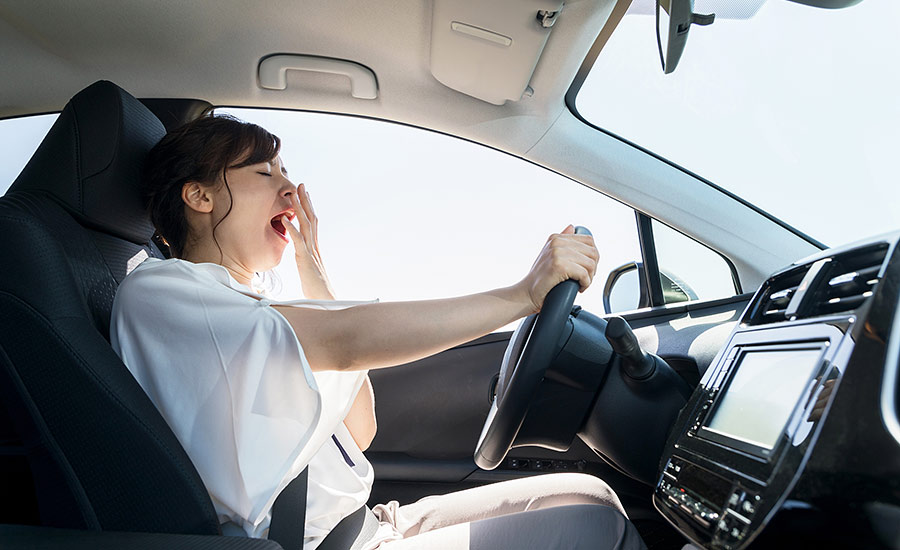
    Driver fatigue is a serious problem that is becoming bigger by the day. There are thousands of accidents every year, and the fast paced, technological world we live in today is certainly not helping to lower the accident rate in our country. Sleep deprivation is becoming increasingly more common among people of all ages. According to the National Sleep Foundation, the National Highway Traffic Safety Administration estimates that 100,000+ police reported crashes are the result of driver fatigue.  These crashes result in approximately 1,550 deaths each year. That’s 1,550 lives that could be saved by getting more rest or not driving when drowsy! Unfortunately, there is no test (like a breathalyzer) to determine if a driver is too sleepy to drive.

    The National Sleep Foundation also reminds us of the high personal and economic costs that are risked by driving while fatigued. If you cause a car accident due to driver fatigue you can face jail time as well as steep fines and high automobile insurance costs. Multi-million dollar settlements have been won by families of crash victims against the at fault driver.

    As a personal injury attorney, I am all too familiar with the results of crashes due to driver fatigue. Here are some tips that you can follow in order to avoid being a fatigued, at fault driver in a crash:

    • Be mindful of early morning driving. Most crashes caused by tired drivers occur between 2am and 6am.
    • Be mindful of afternoon driving, too. Afternoon naps are great, but not while you’re driving! The second most popular time of day for crashes caused by tired drivers is between 2pm and 4pm.
    • Know if you’re at risk. Male drivers between the ages of 18-29, truck drivers, adults with children, and shift workers are more likely to suffer from driver fatigue. You’re also more likely to fall asleep while driving on a high speed, long, boring highway.
    • Take a nap and have a coffee. Seriously! Pulling off the road for a short nap (20 minutes or so) and having a caffeinated beverage can help keep you awake long enough for you to get where you’re going.
    • Avoid alcohol and over the counter drugs that cause drowsiness. This should go without saying, but if you know you’ve got a drive ahead of you, avoid alcohol and sleep inducing drugs.

    If you or someone you know has been the victim of a car crash, you deserve compensation. Call me today for your free consultation at (770) 744-5250. I’ll gather all the facts and evidence in your case to make sure that you are fairly compensated for any loss suffered.

    [elementor-template id=”7280″]

  • Safety & Trucking Accidents

    Safety & Trucking Accidents

    18 wheelers and other large trucks play a vital role in our society. They transport good to our communities that keep things running smoothly, but they also pose certain safety risks on the roads. Trucking accidents are all too common, and in Georgia, 5 college students were killed in a tractor trailer crash this past April. 

    Because trucks are an integral part of our society and won’t be going anywhere anytime soon, its important that all drivers follow certain safety tips to help minimize the risk of having trucking accidents.

    Safety tips for car drivers:

    • Be mindful of the blind spots trucks have– Remember, if you can’t see the truck’s rearview or side mirrors, then the truck driver can’t see you.

    • Give plenty of warning when merging in front of a truck- Because trucks cannot brake as easily and as quickly as passenger cars,  it is important to never cut in front of a truck. If you are getting over into a lane in front of a truck, remember to put plenty of space between you and the truck and use your blinker appropriately.

    • Never pass a truck while it is making a turn- Trucks need much more space to turn than passenger cars do. Even though it may be frustrating to wait behind a truck for it to slowly take a turn and it may be tempting to pass them, you may be putting yourself in danger by doing so.

    Safety tips for truck drivers:

    • Be mindful of your own blind spots– Adjust your mirrors as necessary so that you can get the most complete view of your surroundings, but also remember that you have major blind spots while driving your truck.

    • Make sure you’re feeling well enough to drive before doing so- If you are experiencing any amount of driver fatigue, pull over and rest. Your chance of having an accident increases considerably if you’re not feeling well or rested.

    • Follow all safety precautions when driving through construction zones- Abide by all lowered construction zone speed limits, and make sure you are extra aware as you pass through these zones.

    If you are involved in an accident with an 18 wheeler or another large truck, your health and safety and the health and safety of others involved should be your main concern. Make sure everyone who needs medical treatment gets it immediately, and be aware of any hazardous material the truck may be carrying.

    If you or someone you know has been involved in a trucking accident, contact me today at (770) 744-5250 for your free consultation.

  • Teenage Drivers: Driving Safety Tips

    Teenage Drivers: Driving Safety Tips

    I’m sure you can all remember the day that your teenage children were born. It goes by so fast and seems like just yesterday. You’ve taught them to read and write, and you’ve seen them grow up. Now, its time to teach them to be responsible drivers. Having your teenage driver take a driving safety course is a great way to teach them good driving habits. Today’s society is saturated with technology that is presenting teen drivers with all kinds of distractions.

    Here are some tips for teaching your teen to drive safely:

    1. Selfies- Driving and taking a selfie is NEVER a good idea. Even if you’re stopped at a red light or stop sign, taking a selfie can dangerously distract you from what’s going on. According to a CNN article written in late 2013, driving and selfie’ing is scarily popular. At the time, there were close to 4,000 posts on Instagram under the hashtag “drivingselfie”. Today, there are almost 30,000. Clearly, this is a dangerous trend that is on the rise.
    2. Set a good example- Its so hard, even as adults, to avoid looking at our phones and checking emails, calendars, and texts. Studies have shown that new drivers have significantly fewer accidents when there is a responsible adult in the car. Because you can’t be with your teen driver all the time, you can do your best to ensure safe driving habits by setting good habits yourself.
    3. Eating- Unfortunately, we all have busy schedules and nearly everyone ends up eating in their car at some point. Similar to texting while driving or taking a selfie while driving, eating while driving is distracting. Eating while driving can increase your teen’s chance of having an accident by up to 80%.
    4. Driving costs- Discussing the monetary costs involved with having a car and driving with your teen can help them take it more seriously. Talking about car insurance, car payments, and gas- and perhaps even sharing the cost with your teen driver- may be a much needed reality check.


    If you or someone you know has been the victim of an auto accident due to distracted driving or a teen driver, call Kyle today for your free consultation at (770) 744-5250.


  • Record Trucking Accident Settlement

    In one of the biggest personal injury settlements in Pennsylvania history, a family that suffered death and injuries after being rear-ended by a tractor trailer has received a $26.1 million settlement.
    In 2010, the three Plaintiffs were driving on I-80 in Pennsylvania when they came upon stalled construction traffic.  While Plaintiffs were stopped on the highway the Defendant tractor trailer driver failed to stop and slammed into the rear of Plaintiffs’ car at over 70 miles per hour.  One Plaintiff was killed instantly and another suffered a TBA (traumatic brain injury).
    The driver was operating his tractor-trailer for GLC Transportation Inc. and Great Lake Cheese companies in Ohio and New York.  The amount of the settlement is primarily based on the wrongful death and lifelong injuries and care ($8 million life care plan) which resulted from the collision.  In addition, it was shown that the tractor trailer driver  ignored construction signs as he pressed his rig in excess of 72 miles per hour in the construction zone.
    Obtaining a settlement of this magnitude is the result of a huge amount of work on the part of tractor-trailer and truck injury attorneys.  Many truck drivers and trucking companies maintain only minimum trucking insurance limits of $750,000-$2 million.  The trucking accident attorneys of the Law Office of Kyle Koester are familiar with trucking insurance and Federal Motor Carrier Safety Regulations which help those injured in truck accidents access multiple levels of insurance coverage in trucking cases.  By holding truck drivers, trucking companies, trucking brokers, and sometimes even the shipping customers, accountable for negligent brokering, negligent loading or illegally ordering truck drivers to speed or to drive while fatigued additional layers of insurance coverage are triggered.  If you or a loved one has been injured due to a negligent or reckless truck driver – make sure you hire an attorney experienced in trucking accidents.  Remember -a  trucking accident is not just another car wreck.